Kiwi Spotting at Tāwharanui: What Happens on the Night
A guided kiwi walk at Tāwharanui, from the Anchor Bay briefing to the last red torch: what guests report seeing, how red light works, and what to wear.
Kiwi spotting at Tāwharanui is a slow walk in the dark behind a guide, with a red torch, looking for wild North Island brown kiwi in a pest-free open sanctuary about 90 km north of Auckland. About 300 kiwi live in the park by the estimate of the volunteers who count them, and nobody can promise you one. In the recent reviews in our data check, guests counted anywhere from one bird to eleven.
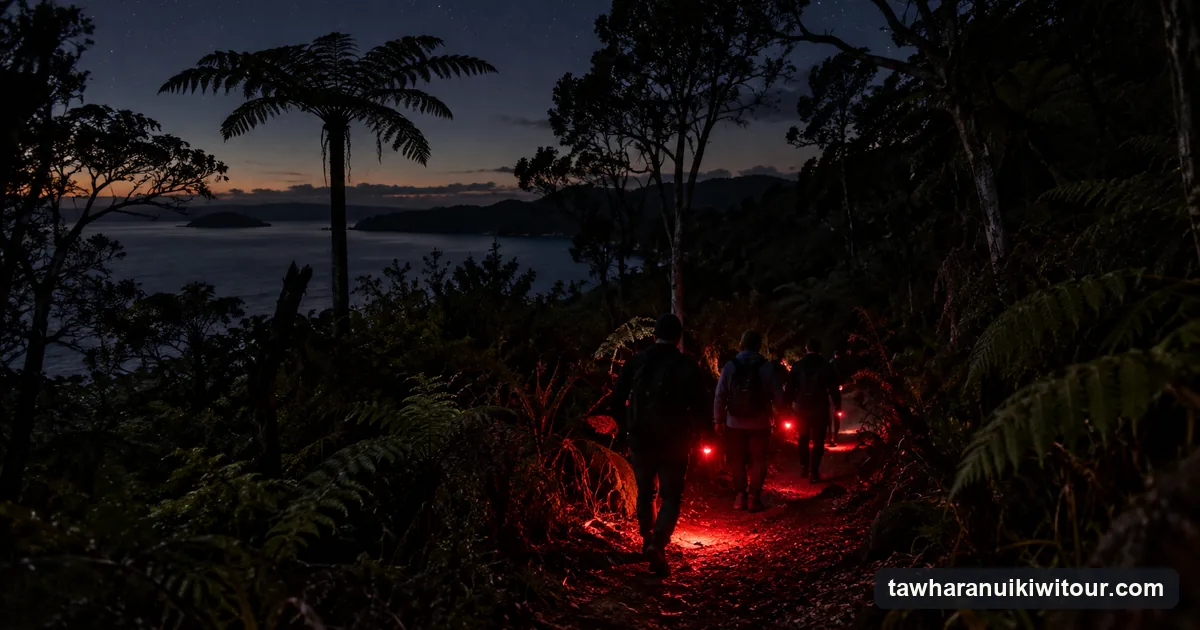
This page follows the Wild Kiwi Bird Spotting Encounter run by Social Nature Movement (SNM), from about $62 on the booking platform when we checked and rated 4.8 over 146 reviews.
Before dark: the gate and the briefing
You meet near the public toilets at the end of Takatu Road, beside the Anchor Bay car park. Anchor Bay is inside the sanctuary fence, past the park’s main gate, and the gate keeps hours. Cars get in from 6am to 9pm during daylight saving and until 7pm the rest of the year. It opens by itself for anyone leaving, at any hour, but nobody gets back in after closing. If you are driving, be inside before it shuts, even when the walk starts later.
No car? Transport can be added at checkout. SNM’s shuttle leaves the Sky Tower an hour and three-quarters before the walk and takes about an hour and a quarter each way, so you are back in the city late at night.
At the car park the guide briefs the group on the evening, safety and the park’s wildlife. Then you wait for the light to go.
On the track
The walk starts as dusk settles. You move slowly through native bush and open ground while the guide listens for calls, watches for movement and reads the signs a kiwi leaves. One reviewer found it easy going at a slow pace, and SNM describes easy to moderate walking on formed tracks, suitable for most fitness levels. The listing’s itinerary shows a two-hour walk; SNM’s own site says tours last two to three hours, starting after dusk.
When the guide finds a bird, the group gathers quietly and watches. Two reviewers saw kiwi close up. One group watched four, a female, two males and a juvenile, go about their business for a minute or two before heading into thicker bush. A reviewer in September saw two kiwi fighting. In another review the guide found five and made sure everyone got a look without disturbing them.
Once it is fully dark, look up: the guide also explains the stars and planets overhead, and the park sits at the end of a peninsula, well away from city lights.
How likely is a sighting?
No operator here publishes a success rate, and none promises a kiwi. The eight reviews in our October data check, written between April and September 2026, counted one, two, three, four, five, five and eleven kiwi; the eighth gave no number. The one-bird night was the slow one. The guide searched for hours and found it in the last twenty minutes.
Eight reviews are a sample, not odds. Two things help: the population has grown from the first 15 birds released in November 2006 to about 300 now, and SNM’s pitch is guides who know where the birds feed. Most of the reviews thank the guide by name.
SNM’s walks do not operate above 10 m/s of wind or 2.4 mm of rain, and the booking can be cancelled free up to 24 hours ahead.
Red light and the rules
The kiwi here are wild, so the rules are short: red light only, no flash, keep to the track, and let the bird decide how close it comes. The listing includes the kiwi-spotting kit; a reviewer describes walking with a red-light torch.
Red is used because kiwi eyes are less sensitive to its longer wavelength, so it disturbs them least. It is not invisible to them, which is why even a red beam is kept off the bird itself. The Department of Conservation’s rules for kiwi encounters add a few more: keep noise to a minimum, don’t approach closer than 5 metres (a kiwi may choose to come closer), give the bird right of way, no food, no spotlights, and no whistling or imitating calls.
What to wear and bring
The listing asks for comfortable shoes, warm clothing and water, and SNM’s own advice is warm clothing and sturdy footwear. There are no shops or cafes near the park, so eat before you come or bring food. Animals are not allowed anywhere in the park, not even left in a car.
No operator sold here publishes a minimum age. Families do come: grandparents in their mid-70s wrote on TripAdvisor in March 2026 that they and their two nine-year-old grandsons saw three kiwi on the walk.
Can you go kiwi spotting without a guide?
Yes. Tāwharanui is an open sanctuary, and Auckland Council’s campground there is open all year; campers can hear kiwi calling at night. Visitors on their own are asked to cover a torch with red cellophane and follow the same rules. What a guided walk adds is local knowledge: where the birds feed, and how to find one in the dark without disturbing it.
For a first visit, book the guide.
Choosing a night? The best time to see kiwi covers the months, the moon and the gate. Is the Tāwharanui kiwi tour worth it compares the four ways to book, from self-drive to dinner in Matakana, and the park guide covers the drive and the campground. Everything bookable is on the homepage.
Facts from Auckland Council, the Department of Conservation and the Tāwharanui Open Sanctuary Society; tour details and reviews from the listings and SNM’s site. Checked October 2026.
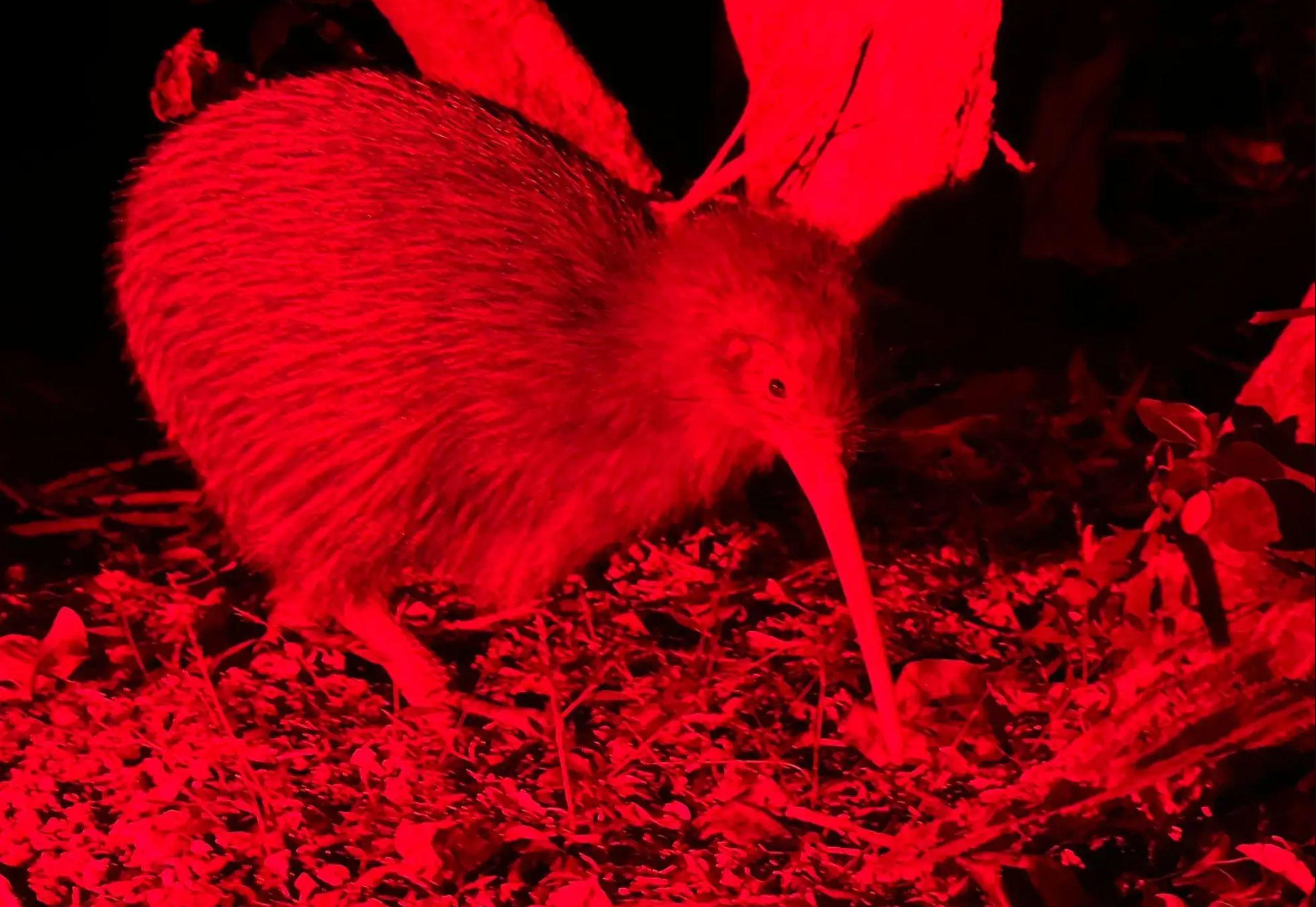
Book the Tāwharanui Kiwi Walk
Two hours on foot after dark in Tāwharanui's pest-free open sanctuary, with a guide who listens for calls and red-light torches for everyone. Rated 4.8/5 from 146 verified reviews, with free cancellation up to 24 hours before. Meet at the Anchor Bay car park, or add transport from central Auckland when you book. The kiwi are wild, so a sighting is never guaranteed.
Check Availability & Book